Yang Fudong
Introduction
Yang Fudong, born in 1971 in Beijing, is a prominent figure in the realm of contemporary art, primarily recognized for his contributions to film, installation, and photography. Based in Shanghai, Yang has developed a distinctive visual language characterized by a dreamlike quality, where silent and disembodied characters transport viewers into aesthetically perfect environments. His works deliberately suspend and confuse time, embodying a unique blend of visual and narrative elements that challenge conventional storytelling. As one of China's most important contemporary artists, Yang Fudong's artistic explorations often intersect with themes of historical, social, and political significance, juxtaposing modern societal conditions with classical Chinese cultural motifs.
Early Life
Yang Fudong was born in the cultural epicenter of Beijing in 1971, during a time of profound political and social change in China. Growing up in the capital city exposed him to diverse cultural influences and a rapidly evolving society, elements that would later inform his artistic endeavors. Despite the lack of detailed personal narratives from his early life, it is evident that the environment in which he was raised played a significant role in shaping his artistic vision. Beijing, with its rich historical backdrop and vibrant contemporary culture, provided Yang with a complex tapestry of inspiration that would underpin his future works.
Education
In pursuit of formal artistic education, Yang Fudong attended the China Academy of Art in Hangzhou, Zhejiang province, where he graduated with a Bachelor of Fine Arts in oil painting in 1995. This institution, renowned for its emphasis on traditional Chinese art forms and contemporary practice, offered Yang a comprehensive foundation in visual arts. Despite his training in oil painting, Yang's artistic inclinations soon gravitated towards filmmaking and photography. His academic background in painting, however, continued to influence his work, evident in the meticulous composition and aesthetic precision of his films and photographs. The synthesis of classical training and modern exploration became a hallmark of his artistic style.
Career
Early Works
Yang Fudong embarked on his artistic career in the early 1990s, initially experimenting with film and video using 35 mm film. The feature film An Estranged Paradise (1997–2002) marked a significant milestone in his career. The film portrays Zhuzi, a young intellectual plagued by existential malaise, wandering through a rapidly modernizing Hangzhou. The narrative reflects Yang's keen interest in psychological displacement, as well as his ability to capture the complexities of individual experiences amidst sweeping social transformations. This early work set the tone for Yang's subsequent projects, establishing his reputation as an artist capable of weaving intricate, introspective narratives with visual elegance.
International Recognition
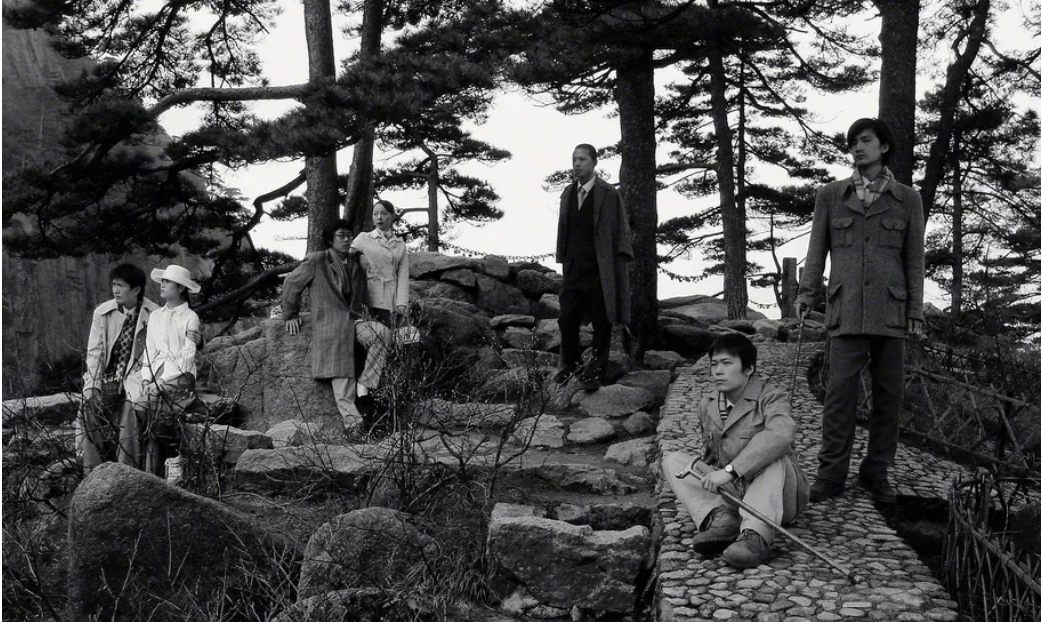
Yang Fudong's international acclaim began to crystallize with the release of his ambitious project, Seven Intellectuals in a Bamboo Forest (2003–07). This five-part film series, showcased at the 2007 Venice Biennale, explores the tensions between reality and idealism through the lens of a contemporary retelling of a classical Daoist narrative. The films follow a group of young literati who retreat from urban complexities to the countryside, only to encounter new layers of psychological and moral ambiguity. The series resonated with audiences worldwide, highlighting Yang's ability to engage with universal themes through a culturally specific framework. His work continued to be featured in prestigious art events, solidifying his status as a global contemporary artist.
Notable Projects
Yang Fudong's oeuvre is punctuated by several notable projects that exemplify his artistic vision and thematic preoccupations. Works such as The Fifth Night, East of Que Village, Backyard- Hey! Sun is Rising, and No Snow on the Broken Bridge further explore his penchant for dreamlike, atemporal narratives. These projects are celebrated for their visual beauty and complex storylines, often characterized by elongated sequences in black-and-white. Yang's ability to blend nostalgia with modernity, drawing on influences from both Chinese and Western cinematic traditions, underscores the depth and versatility of his artistic practice. His work embodies a reflective dialogue on identity, memory, and cultural transition.
Style and Themes
Yang Fudong's artistic style is distinguished by its lyrical and cinematic qualities, often drawing comparisons to film noir and the expressive aesthetics of new wave cinema. His narratives are typically abstract and fragmented, reflecting an ongoing exploration of themes such as memory, identity, and societal change. Yang employs black-and-white cinematography to evoke a sense of nostalgia, while simultaneously integrating the harmonious elements of traditional Chinese handscrolls. Influenced by filmmakers like Jim Jarmusch, Federico Fellini, and Michelangelo Antonioni, as well as Chinese director Fei Mu, Yang's work transcends cultural boundaries, appealing to diverse audiences through its visual storytelling and thematic resonance. His art invites viewers to engage with the intersections of past and present, tradition and modernity.
Exhibitions
Solo Exhibitions
Yang Fudong's work has been prominently featured in solo exhibitions across major international institutions, showcasing the breadth and depth of his artistic achievements. Notable solo presentations include the Fosun Foundation in Shanghai (2019), Long Museum West Bund in Shanghai (2018), Savannah College of Art and Design in Georgia (2018), Espace Louis Vuitton in Tokyo (2017), Daegu Art Museum in Korea (2016), Yuz Museum in Shanghai (2015), Auckland Art Gallery in New Zealand (2015), and ACMI in Melbourne (2014). These exhibitions provide a comprehensive overview of Yang's artistic journey, offering audiences the opportunity to experience his unique visual language and thematic explorations.
Group Exhibitions
In addition to solo exhibitions, Yang Fudong has participated in numerous group exhibitions that highlight his collaborative spirit and engagement with the broader art community. His work has been included in prestigious international events such as the Venice Biennale (2003 and 2007), Documenta XI in Germany (2002), The Asia Pacific Triennial of Contemporary Art in Australia (2006), and Sharjah Biennial in the UAE (2013). These group exhibitions underscore Yang's ability to contribute meaningfully to dialogues within the global art scene, as his work resonates with diverse cultural contexts and artistic discourses.
Awards and Honors
Throughout his career, Yang Fudong has received recognition for his innovative contributions to contemporary art. His ability to bridge cultural and artistic traditions has earned him accolades and honors from institutions and critics alike. While specific awards are not detailed in the provided background information, Yang's presence in major international exhibitions and retrospectives attests to his significant impact on the art world. His work continues to inspire and challenge audiences, reflecting a profound understanding of the complexities of modern life and the timeless nature of human experience.








